
COSS CONSTRUCT
Cold milling machine mid-cut on an asphalt carriageway under flat daylight Milling pass documented at the kerb — Loyang Avenue type widening, flat light, no text

Cooperation stages — how client work is organised

From enquiry to handover planning in five steps

COSS CONSTRUCT (SRL) organises client interaction as a clear sequence from first message to handover planning. Read the kerb before the machines arrive — each stage names what it needs, and what you receive.

This page shows implementation stages, work planning and client interaction from enquiry to handover planning. Singapore entry is planned only. No stage implies a Singapore office, live project, or licence.

Folio — enquiry · scope check · sequence · draft · handover · cossroadworks.digital

Construction work planning in order

Five stages you can forward to your team

Cooperation stages for construction and implementation stages for road works run as one ruled sequence. Each plate below carries its information need and its written result, so client interaction in construction stays traceable from the first note to the last record.

Stage 1: enquiry with task description

You send full name, email, phone, country, project type, task description, and consent to personal data processing through the Contact page. A complete task description is reviewed first — it is the fastest way to move a request for a consultation in construction forward.

  • Name the street section or site, its current condition, and width or area if known.
  • Note drainage tie-ins, outlet points, levels where available, and whether access must stay open.
  • For Singapore enquiries, state planning stage and utility plan status — for example whether cable and gas plans have been obtained.

We confirm receipt on the Thank You page and by reply. That confirmation opens the review, it does not open site work.

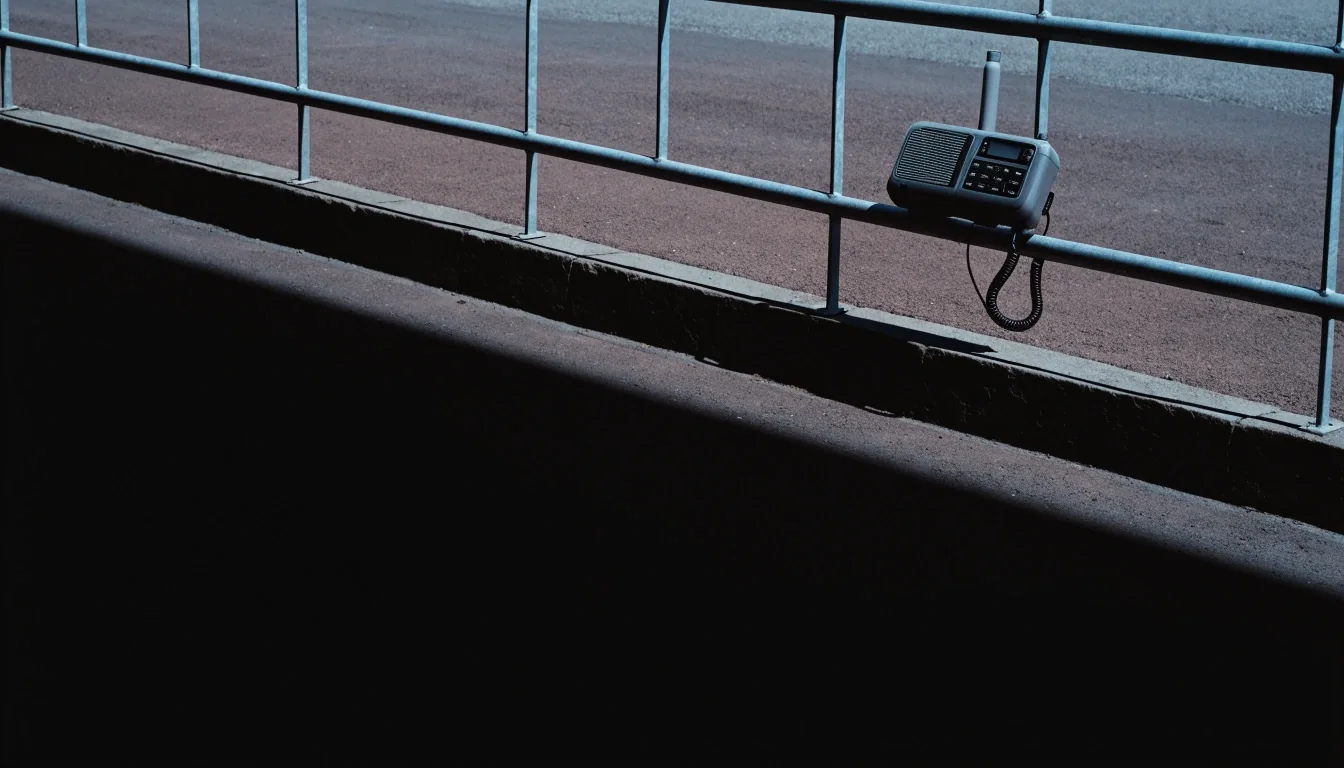
Hand-held site radio on a site railing beside the works

One thread per enquiry — the radio stays on, the record stays written

Stage 2: scope check against registration

We read your note against registered activities: road construction and reconstruction, site preparation, earthworks, base preparation, organisation of construction processes. If the task sits outside that list, we say so promptly and close the loop.

  • Thin notes get focused questions, not general ones — drawings, levels, access limits.
  • Planned entry means planning and coordination only in Singapore.

Approvals, permits, traffic schemes, and site supervision in Singapore would sit with relevant authorities and appointed local parties.

Stage 3: consultation on sequence

A consultation reviews order of operations. For road tasks, that may mean widening versus reconstruction versus milling and overlaying. For ground tasks, it may mean utility protection steps and erosion control planning.

Public illustrations help the conversation stay concrete: Dawson Road network items or Loyang Avenue widening between Pasir Ris Drive 1 and Pasir Ris Drive 3 are used only as public illustrations, never as our work. For ground tasks we walk through utility protection steps, including the 7-day notice and Letter of Requirements under SP PowerGrid practice.

What you receive

  • Written summary of gaps: drawings, levels, outlet points, access limits, programme constraints.
  • Short projects get short summaries; corridor type ideas across several streets get section-by-section notes.
  • Northern corridor grouping of Loyang Avenue, Telok Paku Road, Nicoll Drive and Changi Coast Road, noted street by street.

The paper sequence before site work

Planning and handover, written down

Work planning draft

Stage 4: work planning draft

If the consultation shows a fit, we outline a planning draft: stages, information needed per stage, interfaces with drainage, pedestrian works, retaining structures, and reinstatement.

Interchange type scopes, such as Tengah Vehicular Interchange with KJE work and Lam San Flyover widening for Tengah New Town, remind us to show network effects even when the enquiry names one street.

The draft is a paper sequence. It is not a permit, not a traffic approval, and not a commitment to dates in Singapore. It exists so you can see dependencies before you commission local design or approvals.

Clean close per section

Stage 5: handover planning

Handover planning lists what a site team would need to close a stage cleanly: level records, reinstatement extents, drainage connections made, access restored, and documents filed.

For live routes such as East Coast Parkway, where corridor works must limit disruption, the handover note stresses clean tie-ins and clear records per section.

Next actions

Who provides what, in which order

Record Level records and reinstatement extents filed per section.
Access Access restored and drainage connections confirmed.
Local Where needed, earthworks supervisor roles or erosion control plan named as client-side steps.

Paper first — site work follows local appointments

Planned entry — stated plainly

What these stages do not claim

Five steps organise paper and conversation. They do not create a local presence.

  • No Singapore office is implied by any enquiry, consultation, or planning draft.
  • No ongoing project, completed project, permit, or licence in Singapore is claimed.
  • Only registered activities are discussed: road construction and reconstruction, site preparation, earthworks, base preparation, organisation of construction processes.
  • Dates, guarantees, and technical capabilities beyond that registration are not offered here.

Between the stages

How communication runs

One thread per enquiry. Written replies you can forward. No chat tools that hide the record, no auto-play, no downloads you did not request.

If you add information, we update the planning note rather than starting over. Response times depend on note quality, with complete task descriptions reviewed first.

One thread, written replies

Every stage lives in the same enquiry thread, so drawings, levels, and outlet points stay attached to the note they belong to. You can forward any reply to designers or local parties without retyping.

Updates, not restarts

New photos, revised widths, or fresh utility plans update the existing planning note. The sequence keeps its place — enquiry, scope check, consultation, draft, handover — while the detail sharpens.

Data handled with care

All personal data in this flow is handled as described in the Privacy Policy, with Singapore PDPA considerations noted for Singapore enquiries. Consent travels with the enquiry form on the Contact page.

Privacy Policy explains retention and contact for data questions.

Where to go next

If your note is ready — street section, condition, width or area, drainage tie-ins — send it through the Contact page. If questions remain about sequence or interfaces, the FAQ answers the frequent ones first.

Start with Stage 1

Send the note that opens the sequence

Construction work planning starts with a readable task description: where, what condition, what width or area, which drainage tie-ins, and whether access must stay open. Singapore enquiries add planning stage and utility plan status.

COSS CONSTRUCT (SRL) · Chaussée de Gand 1426, 1082 Berchem-Sainte-Agathe, Belgium · Monday–Friday 9:00 AM – 6:00 PM

Your next move

Choose the route that fits your note. The enquiry form asks for full name, email, phone, country, project type, task description, and consent — the same seven items Stage 1 needs.

Prefer email? Write to [email protected] with the street section and current condition in the first lines.